The Language of Zellige
The art of Moroccan mosaic
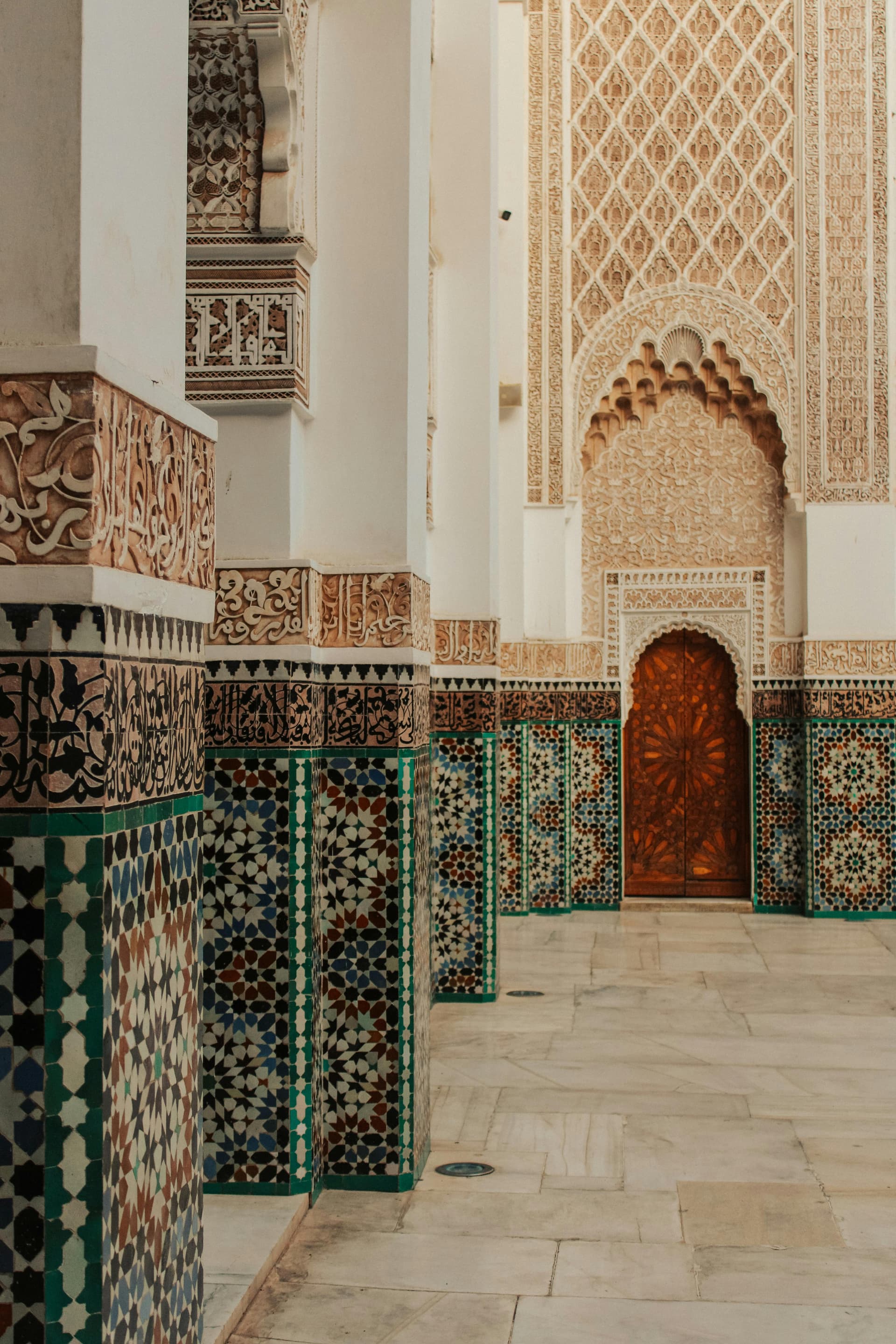
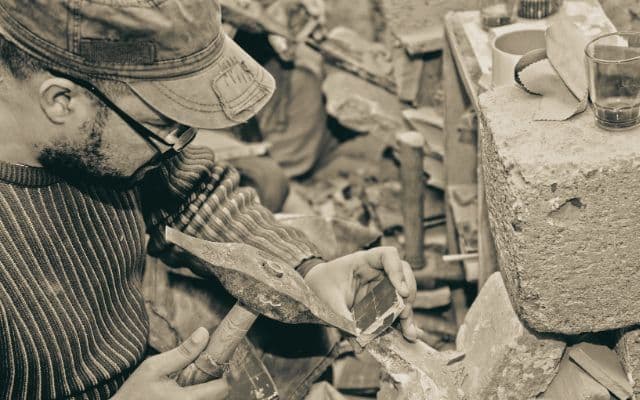
In Marrakech, zellige stands as one of the most refined expressions of Moroccan craftsmanship. Born from an ancestral savoir-faire, this intricate mosaic art consists of assembling small hand-cut pieces of glazed terracotta to create geometric patterns of remarkable precision. Each individual piece, known as a tessera, is carefully shaped and assembled by hand to form compositions of exceptional elegance.
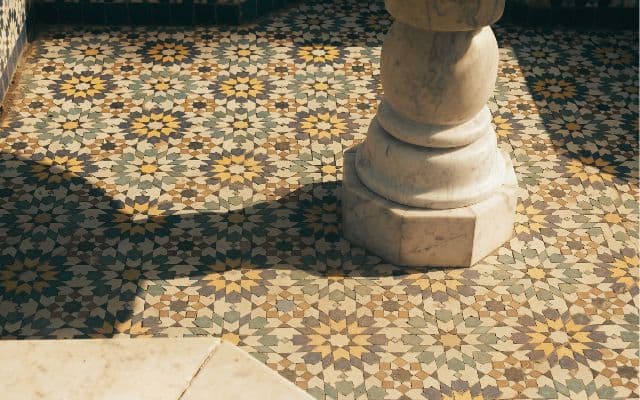
Influenced by Andalusian and Arab-Islamic artistic traditions, zellige is rooted in a heritage where geometry becomes a true visual language. Behind its apparent perfection lies meticulous craftsmanship, where every detail matters. Variations in colour, subtle irregularities, and the precision of each gesture give every creation its own distinctive character.
Nothing here is industrial. Moroccan zellige is an art of detail, guided entirely by the hand of the artisan at every stage of its creation. Through the combination of earth, fire, and patience, raw material is transformed into living decoration, adorning the palaces, riads, fountains, and architectural treasures of Marrakech.
Patterns that dress the city
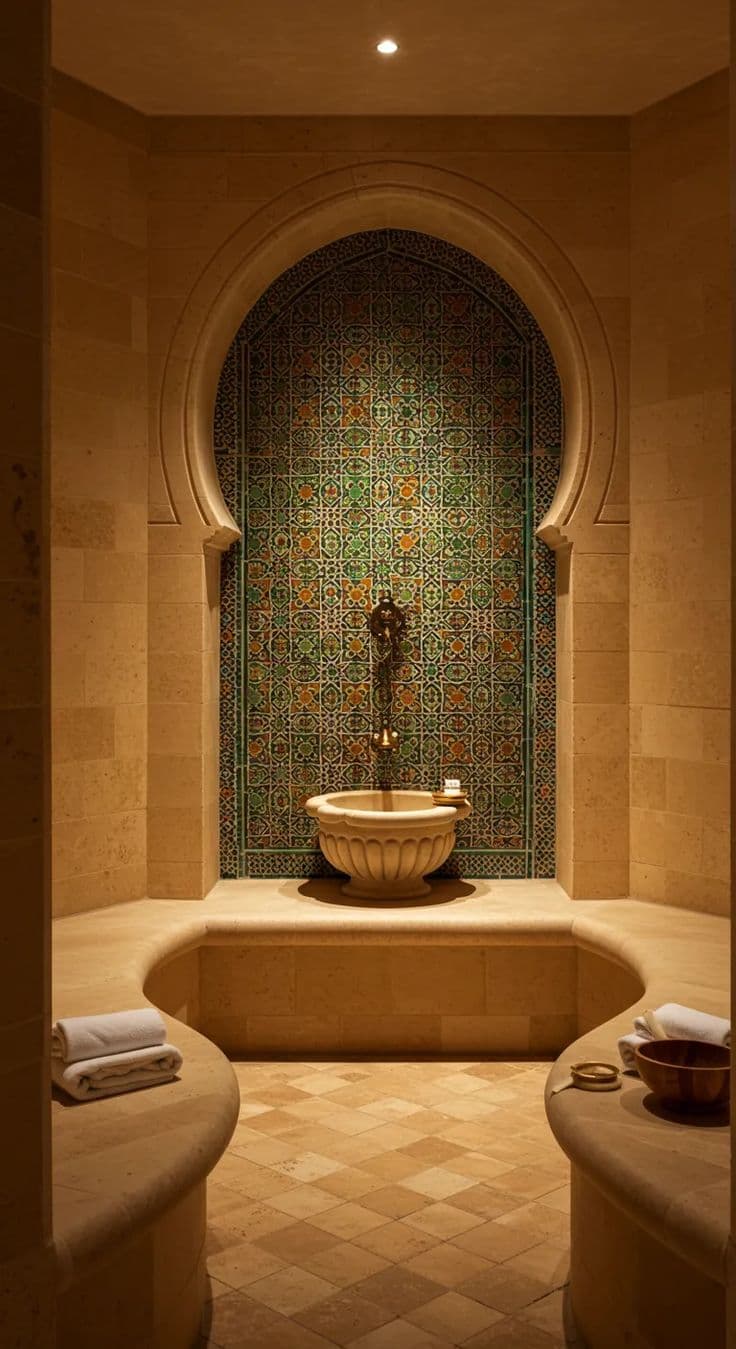
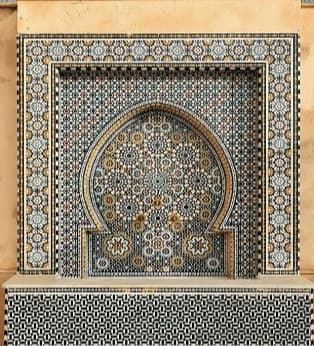
In Marrakech, zellige extends far beyond the workshops where it is created; it quite literally adorns the city itself. It can be found on fountains, the walls of riads, shaded patios, palaces, and traditional hammams, where its colours capture and reflect the light in subtle variations. Each composition brings a touch of elegance and highlights the important role this art form plays in Moroccan architecture.
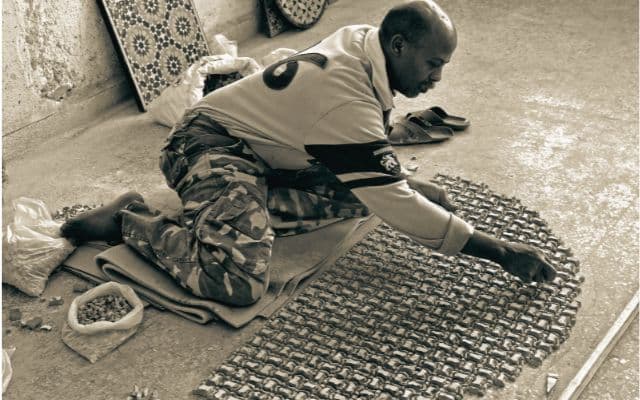
Within the medina, certain workshops offer a glimpse into the different stages of its creation. Stacks of glazed tiles sit beside artisans carefully cutting individual tesserae, while intricate patterns gradually take shape on the floor before being assembled. Every workshop becomes a creative space where geometry seems to come to life.
The eye is naturally drawn to the details: a motif repeated endlessly, a subtle variation in colour, or an almost perfect alignment. Moroccan zellige reveals itself gradually, like a discreet yet ever-present signature that accompanies every stroll through the winding streets of Marrakech.
Composing with the patience of gesture
Learning the art of Moroccan zellige means discovering a craft where precision and patience are essential. Unlike many other forms of craftsmanship, every gesture requires careful thought and attention to detail. One must understand geometric shapes, anticipate how they fit together, and imagine the final pattern before it even begins to appear. This approach quickly transforms the workshop into an experience that is both creative and meditative.
Guided by a skilled artisan, visitors learn how to handle the tesserae, the small hand-cut pieces of glazed terracotta that form Moroccan mosaics. Each element is adjusted, repositioned, and integrated into the composition until the design gradually comes to life. Behind every pattern lies a fascinating logic built on balance, symmetry, and precision.
Yet the experience goes far beyond the finished result. Creating a zellige composition means slowing down, observing carefully, and building with discipline and care. Through this ancestral craft, Marrakech reveals itself in a different way—through detail, harmony, and the understated beauty of objects shaped by hand.