
The Secrets of Carved Woodwork
Wood, a material of character
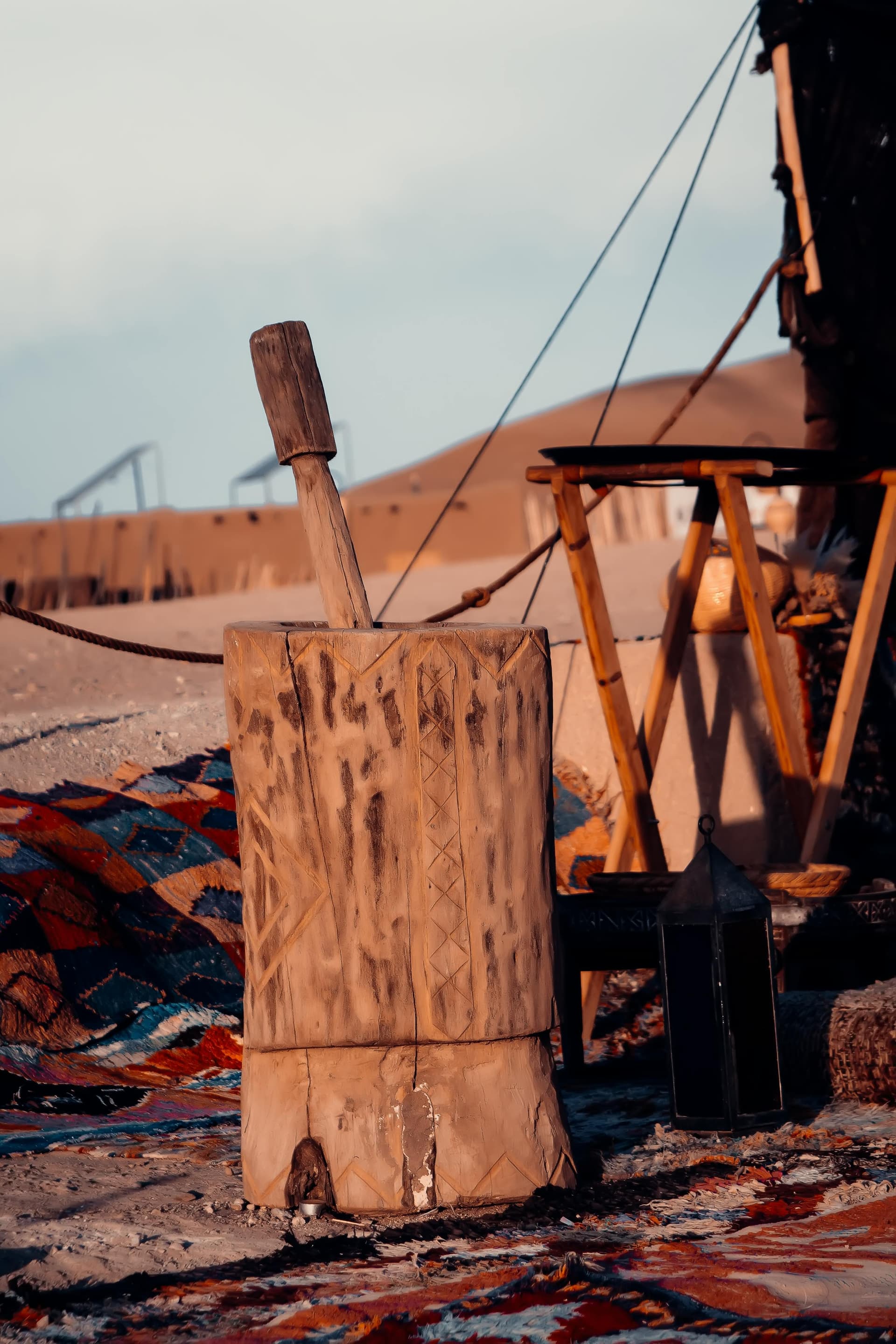
In Marrakech, the art of carved woodwork is one of the most refined expressions of Moroccan craftsmanship. Cedar, thuya wood, and walnut are carefully selected for their beauty, durability, and natural qualities. In traditional workshops, raw wood is carved, shaped, and polished with remarkable precision to create decorative objects, furniture, and architectural elements of exceptional elegance.
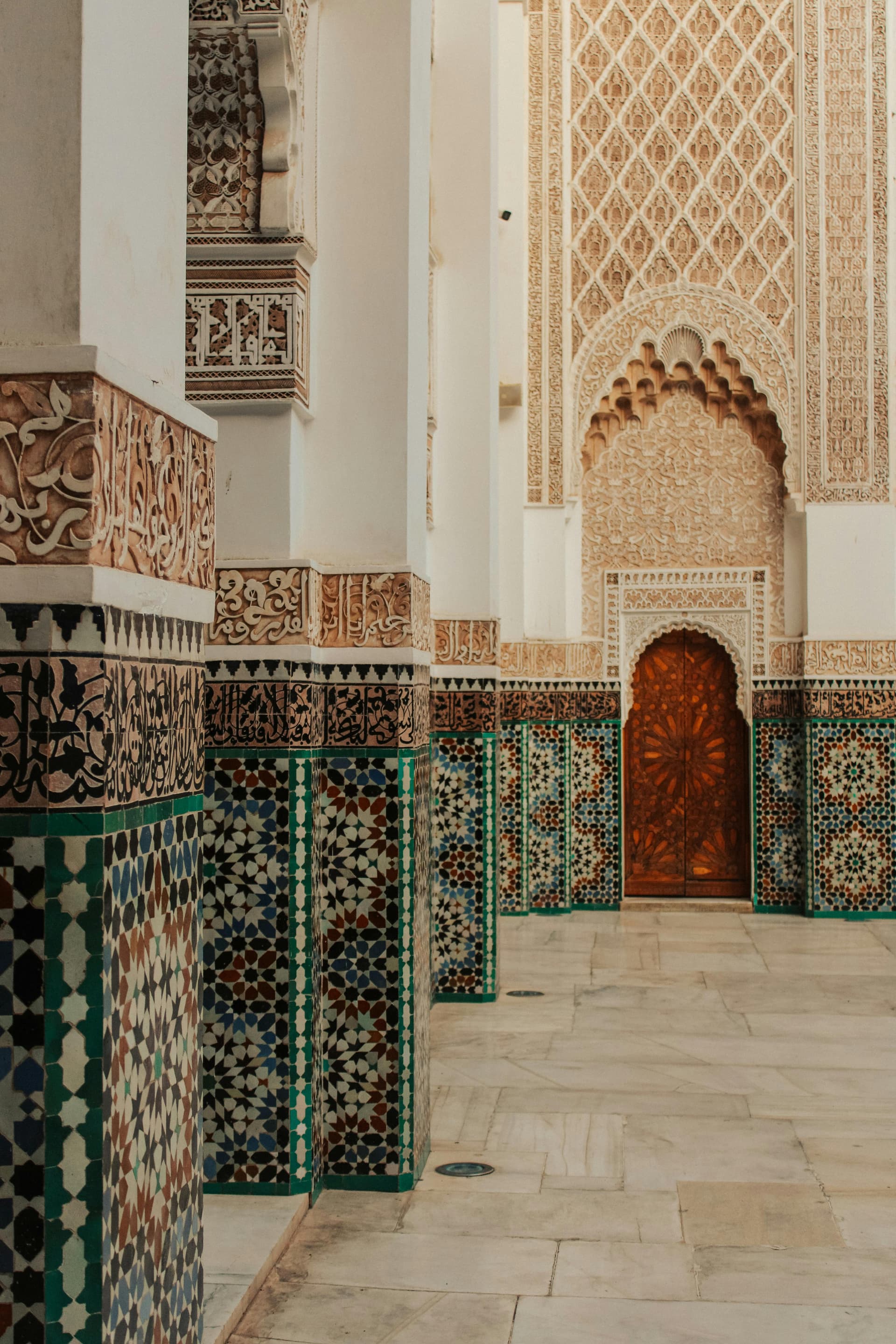
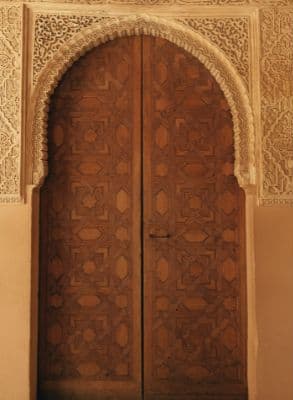
This craftsmanship is deeply rooted in traditional Moroccan architecture, where wood has adorned ceilings, monumental doors, mashrabiyas, and riads for centuries. Beyond its practical function, it becomes a true decorative language in which every motif tells a story and contributes to the identity and character of a place.
Here, wood is a living material that evolves over time. Each creation preserves the traces of the artisan’s hand, the precision of manual craftsmanship, and an unwavering attention to detail. Blending tradition, technique, and creativity, carved woodwork reveals the full richness of Morocco’s artisanal heritage.
Between sculpture and architecture
In the medina of Marrakech, woodwork reveals itself at every turn. A finely carved door, an intricately decorated ceiling, or a discreetly ornamented façade reflects the richness of this ancestral craft. Simply looking up is often enough to discover remarkable details that contribute to the unique charm of the city’s riads, palaces, and traditional residences.
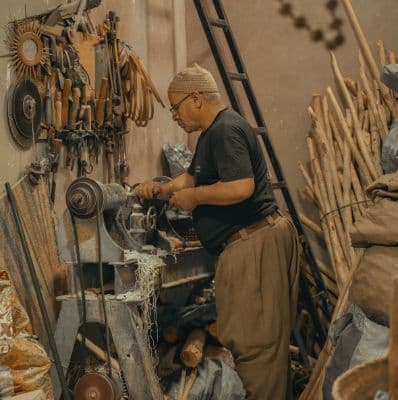
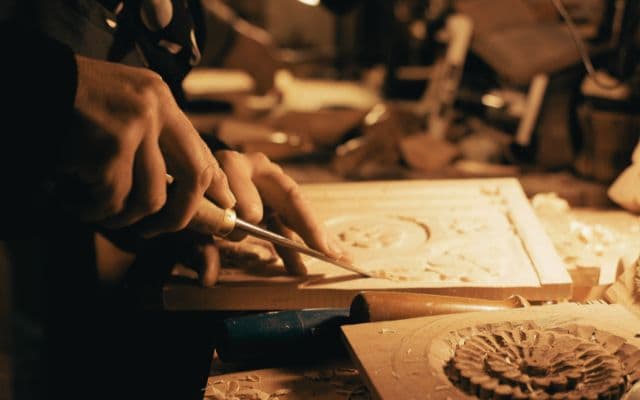
Within the souks, workshops unveil another side of this craftsmanship. Wood shavings gather on the floor, tools rest within easy reach, and artisans work in an almost meditative silence. Gradually, carved trays, chests, mashrabiyas, and decorative panels take shape beneath their precise and skilled hands.
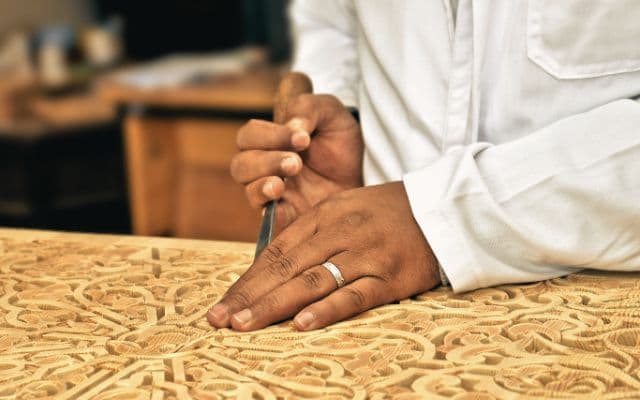
The eye is naturally drawn to the geometric motifs, delicate reliefs, and intricate carvings. Moroccan carved woodwork becomes a true visual language where tradition, elegance, and creativity come together. Each piece tells a story and showcases the richness of Marrakech’s artisanal heritage.
Carving, turning, revealing
Learning the art of Moroccan woodwork means discovering a living material that responds to every gesture. Unlike many other crafts, each movement leaves an immediate mark and requires patience, precision, and attention to detail. Understanding the grain of the wood, controlling the pressure of the tools, and working in harmony with the material quickly transforms the workshop into a rewarding and immersive experience.
In some workshops, the experience begins with wood turning. Standing before a spinning lathe, visitors watch as the piece gradually takes shape beneath their hands. The wood is hollowed, rounded, and transformed through a series of carefully guided movements, revealing the beauty hidden within the raw material.
The process then continues with carving, refining, and finishing. Guided by a skilled artisan, each gesture becomes more precise while the material slowly reveals its character. Little by little, the final form emerges, as though it had always existed within the wood, simply waiting to be unveiled. Through this experience, visitors gain a deeper appreciation of Morocco’s rich craftsmanship heritage.